
Can a foreigner marry a Qatari woman? Yes, but not without official approval. Under Article 4 of Law No. 21 of 1989 Regulating Marriage to Foreigners, a Qatari woman may marry a non-Qatari man only after the approval of the Minister of Interior, where there are social reasons for the marriage, her legal guardian consents, and the man meets four legal conditions. Only after approval can the marriage contract be registered.
This guide explains who can apply, the conditions the husband must meet, the steps from approval to registration, and what the marriage does and does not change. We checked the provisions of Law No. 21 of 1989 and the Family Law cited here on the Al Meezan legal portal on 27 November 2026.
Planning to marry a Qatari woman and want your file right the first time? The office of lawyer Fatima Thani Al-Maadeed reviews your documents, checks the legal conditions and follows the approval and registration steps within the scope of your power of attorney.
Who Can Apply? The Restricted Categories
Article 1 of the law prohibits Qatari men and women in certain categories from marrying a foreign national, except a citizen of a GCC country:
If you plan to marry a Qatari woman, first confirm that she is not in one of these categories.
- ministers, undersecretaries, heads of public institutions and authorities and their deputies;
- members of the diplomatic and consular corps;
- officers, non-commissioned officers and members of the armed forces, police and other security services (with limited exceptions and the approval of the competent minister or head of service);
- students on scholarships abroad, whether state-sponsored or self-funded.
The Council of Ministers may add other positions, and an Amiri decision may exempt individuals where the public interest requires. If the Qatari woman is not in one of these categories, the route is Article 4.
Conditions for a Foreigner to Marry a Qatari Woman
Article 4 requires all of the following:
| Condition | What it means |
|---|---|
| Approval of the Minister of Interior | The application is studied by the Ministry of Interior before any contract is registered. |
| Social reasons for the marriage | The reasons are set out in the application with supporting documents. |
| Consent of the legal guardian | The bride’s guardian must authorise the marriage. |
| Health | The foreign husband must be free of diseases that prevent marriage. |
| Criminal record | He must not have been sentenced to a custodial penalty for a felony, or for a crime against honour or trust. |
| Entry ban | He must not be on the lists of people banned from entering Qatar. |
| Financial ability | He must be financially able to support the family. |
The marriage itself must also meet the Family Law requirements for a valid contract, including the guardian, two witnesses and the pre-marriage medical certificate under Article 18.
Step-by-Step: From Approval to Marriage Contract
The process usually runs in these six steps:
- Check eligibility: confirm the bride is not in an Article 1 category and that the husband meets the Article 4 conditions.
- Prepare the documents: identity documents for both parties, proof of marital status, evidence of financial ability, and any other papers the Ministry requests; foreign documents usually need attestation and a certified translation.
- Apply for approval: the application goes to the competent department of the Ministry of Interior, where the committee for marriage to foreigners studies it, and the decision is issued by the Minister.
- Pre-marriage medical examination: each party obtains the medical certificate required by Article 18 of the Family Law.
- Register the contract: after approval, the contract is registered through the family documentation services of the Supreme Judiciary Council.
- Attest the contract if needed: if it will be used outside Qatar or before an authority that requires attestation.
The committee for marriage to foreigners does not register the contract; its role is the approval stage.
What Changes After the Marriage?
Once the marriage is registered, the main effects are:
- The family has a clear legal status in official dealings in Qatar.
- The husband can apply for residence under the rules in force and their conditions.
- The rights and duties of both spouses are governed by the Family Law.
- The children’s registration and services follow the applicable regulations.
Important: marriage does not automatically grant Qatari citizenship or exceptional privileges; these are governed by separate laws and conditions.
Common Reasons for Delay or Refusal
Applications are most often delayed or refused for these reasons:
- A missing or unattested document, or details that differ between documents.
- No clear statement of the social reasons for the marriage.
- The guardian’s consent is missing.
- The husband does not meet one of the Article 4 conditions.
- Trying to register the contract before the approval is issued.
How Our Office Helps
Our office can support you with:
- Assessing eligibility against Articles 1 and 4 based on the husband’s nationality and the circumstances.
- Preparing a tailored document list, including translations and attestations.
- Reviewing the file before submission to avoid formal mistakes.
- Following up contract registration after approval.
- Advising on special cases such as contracts concluded outside Qatar.
Need help preparing the approval file? We check the conditions, organise the documents and follow the file until the marriage contract is registered.
A complete file is the best way to marry a Qatari woman without repeated requests for missing papers.
Frequently Asked Questions
Can a foreigner marry a Qatari woman?
Yes. Under Article 4 of Law No. 21 of 1989, a Qatari woman who is not in one of the categories listed in Article 1 may marry a foreigner with the approval of the Minister of Interior, if there are social reasons for the marriage, her legal guardian consents, and the man meets the conditions set by the law.
What conditions must the foreign husband meet?
He must be free of diseases that prevent marriage, must not have been sentenced to a custodial penalty for a felony or for a crime against honour or trust, must not be on the list of people banned from entering Qatar, and must be financially able to support the family (Article 4).
Which Qatari women cannot marry a foreigner?
Article 1 prohibits Qataris in certain categories — such as ministers, diplomats, members of the armed forces, police and security services (with limited exceptions), and students on scholarships abroad — from marrying a foreign national, except a GCC citizen, unless an exception is granted by Amiri decision.
Who approves the marriage of a Qatari woman to a foreigner?
The Minister of Interior. The application is studied through the Ministry of Interior's committee for marriage to foreigners before the contract is registered.
Is a medical examination required?
Yes. Article 18 of the Family Law requires each party to submit a pre-marriage medical certificate, and the notary informs each party of the other's certificate before registering the contract.
Does marrying a Qatari woman give the husband Qatari citizenship?
No. Marriage does not automatically grant citizenship or exceptional privileges; nationality is governed by separate legislation and conditions.
For advice on marry a Qatari woman or on your approval file, contact the office of lawyer Fatima Thani Al-Maadeed.
Legal notice: This information is for general guidance only and is not legal advice. For advice on your specific case, please consult a qualified lawyer.
You may also want to read: Qatari marriage to a foreigner, documents required for marriage in Qatar and marriage contract registration in Qatar.
Official Sources
The legal information in this article is based on the following official sources:
- Law No. 21 of 1989 Regulating Marriage to Foreigners, Articles 1 and 4 – Al Meezan
- Family Law No. 22 of 2006, Article 18 – Al Meezan
Source: Al Meezan, the Qatar Legal Portal of the Ministry of Justice. Sources last reviewed: 26 November 2026.
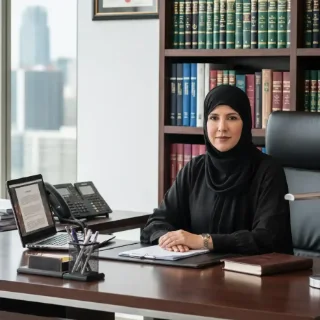
Fatima Thani Al-Maadeed is a leading lawyer admitted before the Court of Cassation in Qatar, with extensive experience in Qatari law. She began her legal career with a firm belief that the law is the essential tool for achieving justice and protecting rights. Her ambitious vision led her to found a law office in Doha in 2011, to be a true partner to clients at every step of their legal journey.
Her practical and advisory experience has built an advanced understanding of procedures and regulations, which is reflected in how she manages cases and provides clear, well-considered legal advice that meets her clients’ needs and protects their rights to the highest professional standards.